





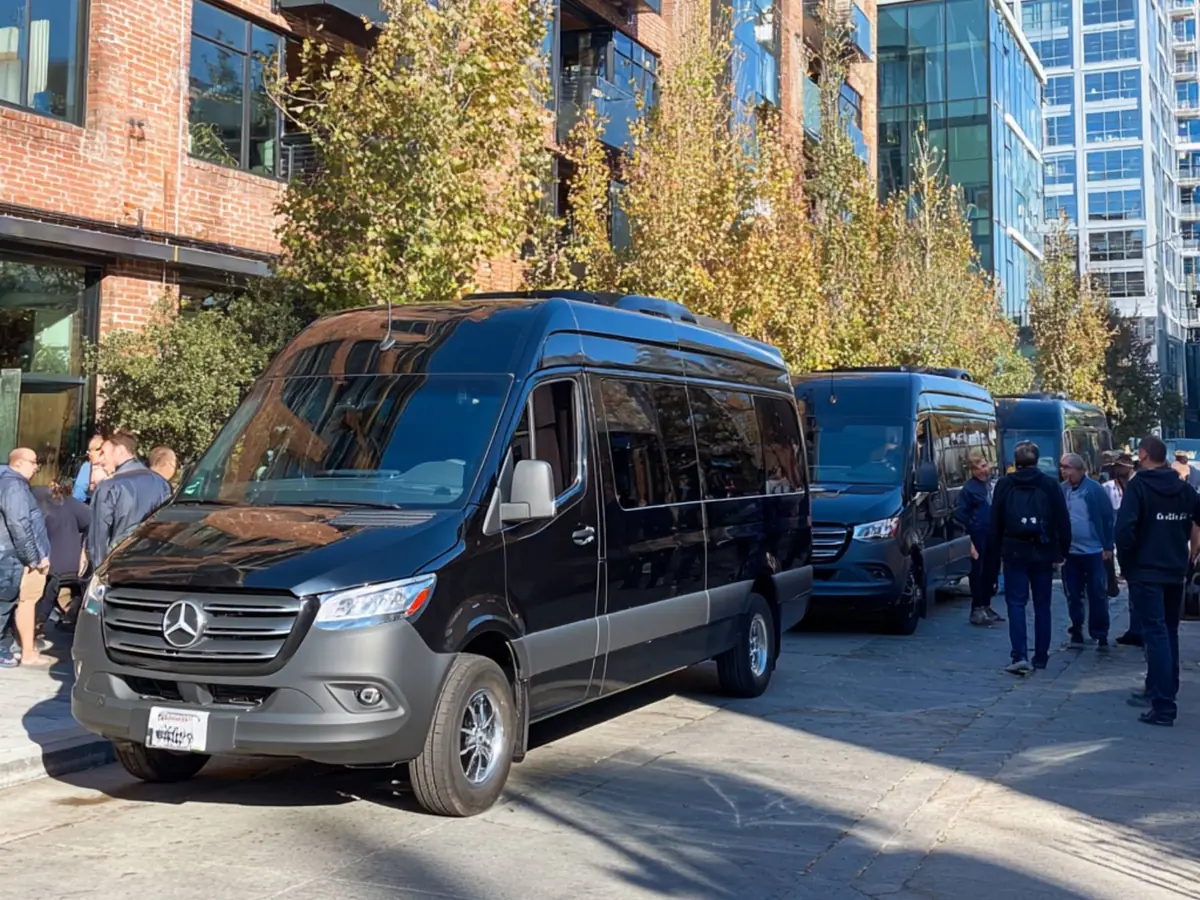





A managed employee shuttle service pays for itself in four ways. Your people arrive on time and less stressed. Parking pressure drops, often enough to shelve a garage expansion. Your recruiting reach grows, because the commute stops being a dealbreaker. And your sustainability numbers improve with every car that stays home.
It works at real scale. Illumina runs Swoop shuttles across five locations at 78% ridership, which only happens when people genuinely prefer the shuttle to driving. Read the Illumina story.

Run the numbers the way your CFO would. An employee commute program touches four lines of the budget, and only one of them is our invoice.
Parking. Every daily rider is a parking space you do not have to build, lease or maintain. A garage expansion is a capital project with a decade attached. A shuttle is an operating line you can resize next quarter.
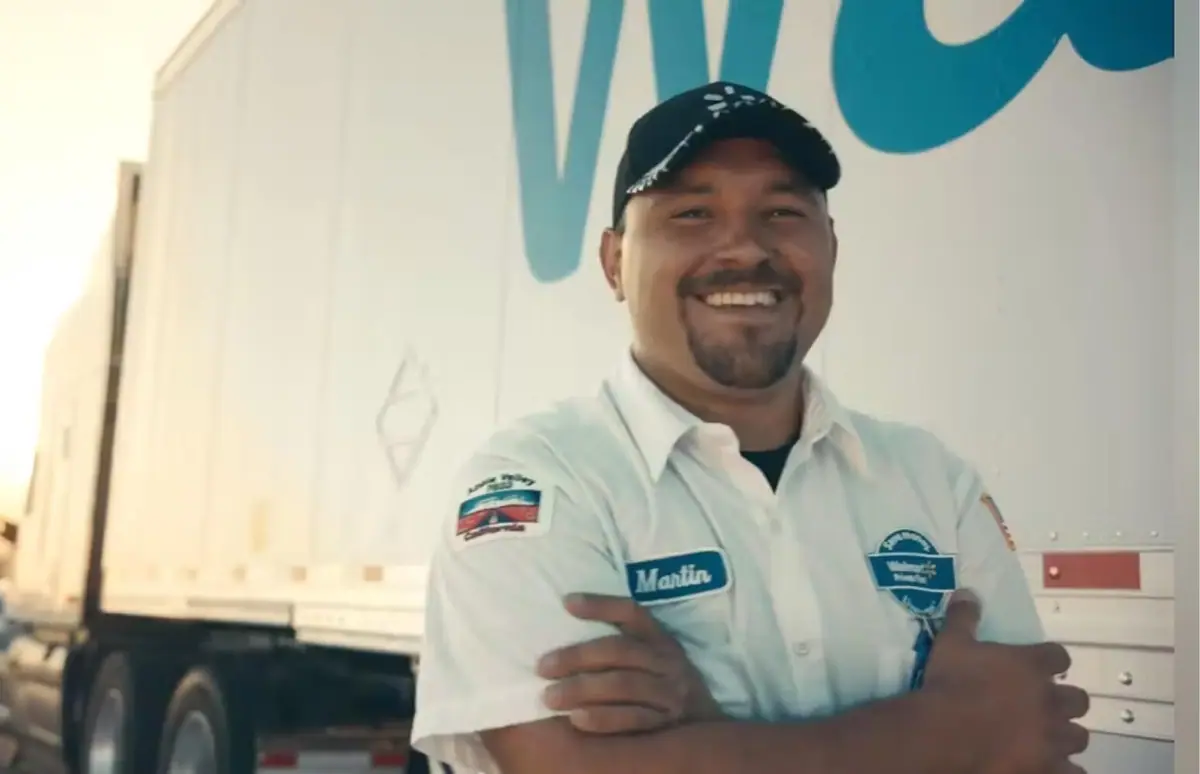
Absenteeism. When the commute stops being fragile, people show up. Walmart cut absenteeism by 38% after our shuttles started serving 3,200 workers a day at its distribution centers. Read the Walmart story.
Hiring and retention. Office employee transportation widens your hiring radius without moving your office, and the people you already have stay longer when the worst part of their day gets easier.
Utilization. A program only returns what it fills. Asana's last-mile shuttle in San Francisco runs at 85% utilization and took 8.5K cars off the road. Read the Asana story.
We build this model with your sites, your headcount and your current parking spend before you sign anything. If the math does not work, we will tell you.
Cost follows three things: routes, hours and vehicle sizes. Recurring shuttle programs typically run $8,000 to $50,000 per month, depending on routes, vehicles and geography. That is why we never quote from a rate card.
We size vehicles to real ridership, so a route that needs a 14-seat van never pays for a 56-seat coach. Most of the employee transportation solutions we run replace spending that is already on your books: parking, rideshare reimbursements and the cost of losing people to a bad commute. Tell us your sites and shifts and we will come back with real numbers.
Most employee bus services go wrong in the same place, and it is not the driver. It is the vehicle size. A 56-seat coach on a nine-person route burns money every morning. A 14-seat van on a 40-person route leaves people at the curb, and they only put up with that once.
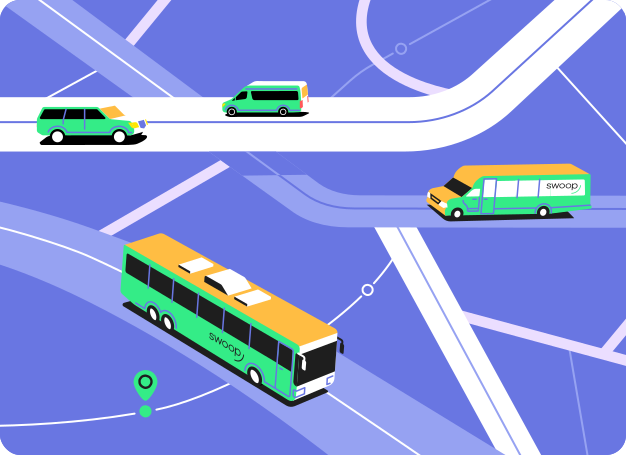
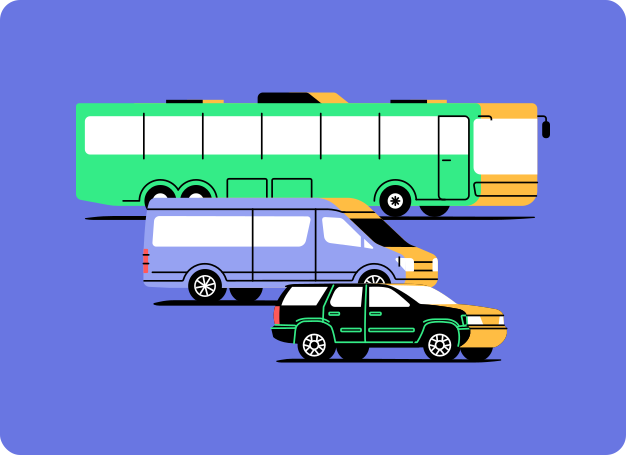
We run three core sizes and mix them freely inside one program:
- Sprinter van, up to 14 seats: neighborhood pickups, last-mile hops from a transit hub, small night shifts, tight streets and low garage clearances.
- Minibus, 25 to 35 seats: the workhorse of most programs. Enough capacity for a full shift change, small enough for door-level pickups.
- Motorcoach, 56 seats: long runs from a park and ride, a distribution center at 6 a.m., or a campus that empties all at once.
Depending on the vehicle, riders get Wi-Fi, USB charging, reclining seats and air conditioning, and coaches on longer routes have restrooms. Vehicles with wheelchair lifts are available, and every route is ADA compliant.
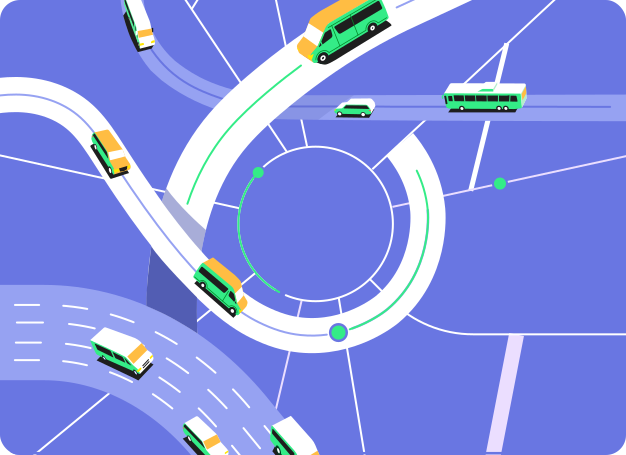
The point is the mix. Companies with several sites usually run all three, and as ridership moves, we move the vehicles. That is the difference between an employee bus program and a charter booking: a charter gives you a bus for a day, a staff bus service resizes itself as your headcount, shifts and sites change.
One question worth asking any provider: what is your average seat fill? If they cannot answer, you are paying for the empty seats.
Reliability is the whole product. Swoop runs at 98% on-time across 56+ cities, with background-checked drivers, $5M insurance, and DOT and ADA compliance on every route. Our 24/7 Command Center monitors every route in real time and dispatches a replacement when needed.
When OpenAI needed shuttle service for employees across five San Francisco locations, we launched in two weeks and hit 99.7% on-time. Read the OpenAI story.
Public transit is built for cities, not for your roster. A dedicated shuttle picks up where your people actually live, arrives when your shifts actually start, and never leaves them waiting on a delayed connection. Riders travel with colleagues, there is no transfer to miss, and the service changes when your sites or hours change.
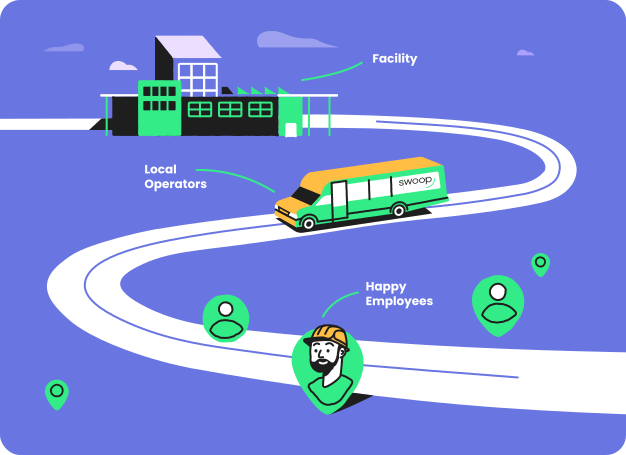
Swoop runs complete staff transportation services: route design, vetted drivers, live tracking, rider communication and monthly reporting, under one roof. Our staff shuttle programs cover office teams, hospitals, plants and distribution centers, including shift-timed transportation for employees who work nights and weekends.
If your workforce badges in at 6 a.m., that is not an edge case to us. Walmart's 3,200 daily riders are exactly that kind of program.
Every Swoop ride is 100% carbon neutral, on every trip we run.
Employee commuting is one of the few emissions categories a facilities or HR decision can genuinely move. Swapping a hundred solo drivers for two full coaches is a change you can put in a greenhouse gas report and defend.
Emissions saved sits on the same dashboard as ridership, on-time rate and cost per seat, pulled from actual trips rather than an estimate at the end of the quarter. See Data & Insights.
Already have shuttles but no visibility? We take over workplace shuttle management for existing programs: your routes, our platform and operations team behind them.
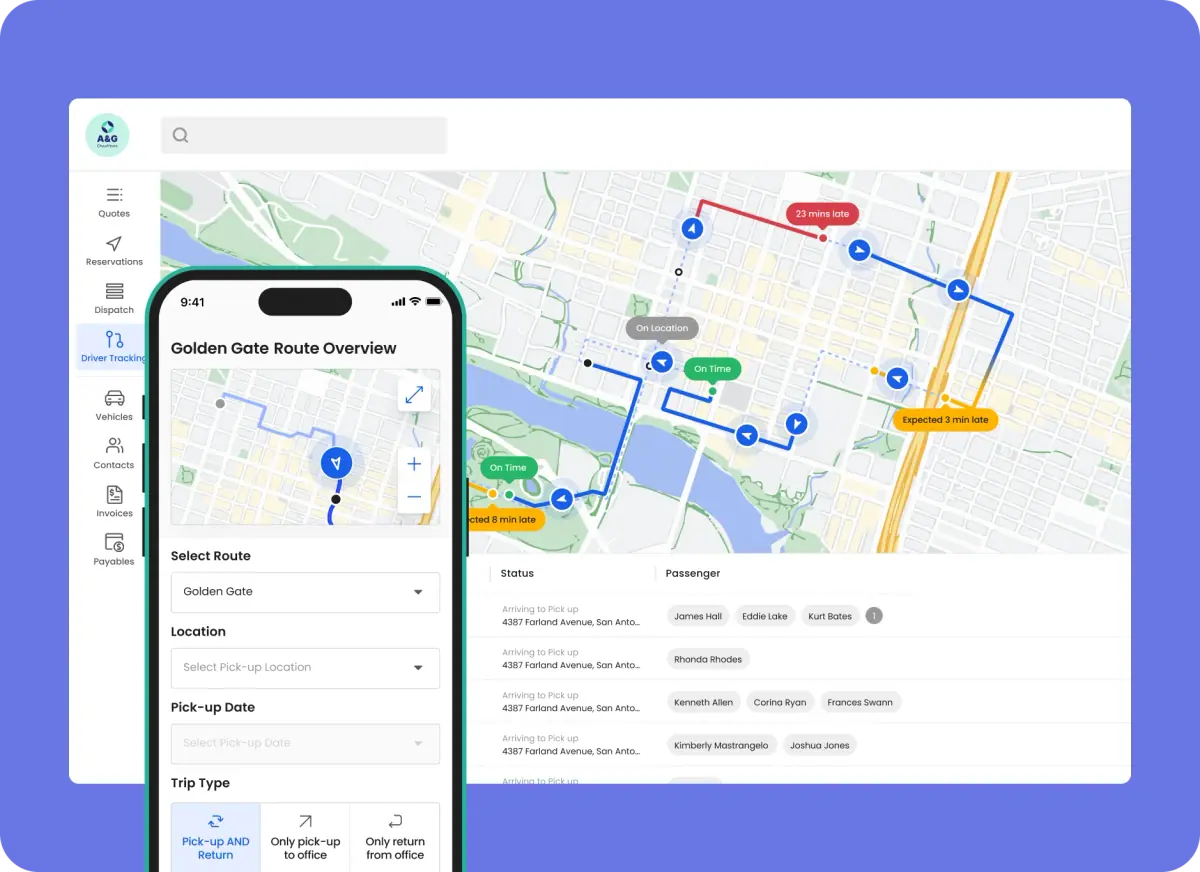
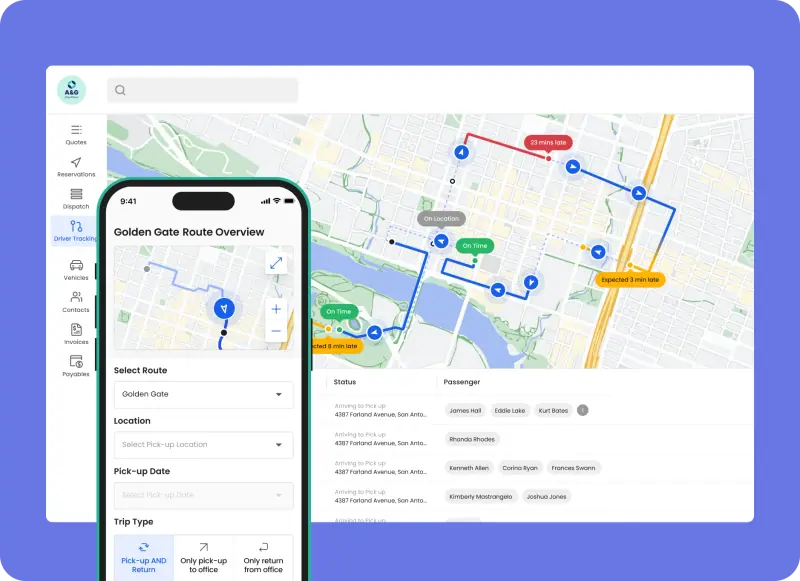
Riders get the Swoop app with live ETAs (see the Shuttle App), drivers get optimized routes (see the Driver App), and you get a dashboard with ridership, on-time rate, cost per seat and emissions saved.
For companies with several sites, that means one contract, one dashboard and one number to call, instead of four regional vendors and four spreadsheets. The first thing we usually find is a route carrying air, and trimming it is the fastest saving on the table.
Every program is one of five shapes, or a mix:
- Home to work: fixed or flexible routes from the neighborhoods where your people live.
- Last mile: short hops from train stations and transit hubs to your door. The Asana model.
- Intra-campus: loops between buildings, garages and satellite sites. See inter-campus shuttles.
- Park and ride: remote lots plus a quick shuttle, the fastest fix for an overflowing parking lot.
- Corporate shuttle: an always-on office loop, managed end to end. See corporate shuttle service.
Looking for employee transportation services near you? Swoop operates in 56+ cities across 47 states, with deep home bases in San Francisco and New York, and strong Los Angeles coverage. One partner for every location, including multi-site programs that span states.
What is an employee shuttle?
An employee shuttle, also called a work shuttle or staff shuttle service, is a scheduled bus or van service that carries employees between home neighborhoods, transit hubs, park and ride lots and the workplace. It runs on fixed or flexible routes timed to shift start and end times, and is usually paid for by the employer rather than the rider.
How do companies provide transportation for employees?
Most start with a managed shuttle program: routes between transit hubs, neighborhoods and the workplace, run by a partner like Swoop. You set the goals, we run the operation, and nobody in HR becomes a part-time dispatcher.
How much does an employee shuttle service cost?
Recurring shuttle programs typically run $8,000 to $50,000 per month, depending on routes, vehicles and geography. Swoop sizes vehicles to real ridership and quotes per program, not from a rate card.
How long does it take to launch an employee shuttle program?
Two weeks is realistic for most programs. That is what we did for OpenAI across five San Francisco locations, at 99.7% on-time. Complex multi-site rollouts take a little longer, and you get an honest timeline on day one.
Can small companies use an employee shuttle service?
Yes. Plenty of programs start with one route and one van, usually the single commute that costs you the most in parking or late arrivals. Start there, watch the ridership, and add routes when the numbers say so.
Is an employee shuttle the same as public transport?
No. Public transit runs on a network built for a whole city, on a timetable set by that city. An employee shuttle runs on a route built around where your people live and a timetable built around when your shifts start.
How does an employee shuttle help with greenhouse gas reporting?
Every Swoop ride is 100% carbon neutral and every trip is logged. Emissions saved appears on your dashboard alongside ridership and on-time rate, so the number in your report comes from real trips.
What happens if a vehicle breaks down or a driver does not show?
Swoop's 24/7 Command Center monitors every route in real time and dispatches a replacement when needed. Backup protocols are built into every managed program.
Can employees track the shuttle live?
Yes. Every rider sees their shuttle on the map with a live ETA in the Swoop app, and gets notified if anything changes.
Do you handle shift-based and industrial workforces?
Yes. Plants, hospitals and distribution centers run on precise shift times, so we build the schedule around them. Walmart's 3,200 daily riders are the proof.
How do you choose an employee shuttle company?
Compare three things: verified on-time performance, a real rider app, and named customers with published results. Swoop runs at 98% on-time, holds a 4.9/5 rating across 1,190+ reviews, and publishes its case studies with the numbers in them.